

Hair thinning doesn't discriminate, it affects women and men, often quietly, and it can chip away at confidence long before it's obvious to anyone else. At The Medical Skin Clinic, we understand the emotional and physical impact of thinning hair, whichever way it shows up for you. That's why we offer a modern, regenerative approach that goes beyond surface-level solutions: PRF hair restoration.
This non-surgical treatment harnesses your body's own healing components to help restore hair density and scalp vitality. Whether thinning is related to hormone shifts, genetics, stress, or age, Platelet-Rich Fibrin (PRF) offers a safe and natural way to support long-term hair growth, without medication or surgery.
What Is PRF Hair Restoration?
PRF hair restoration is a regenerative injectable treatment that uses the power of your own platelets and fibrin to stimulate dormant hair follicles. It's an evolution of Platelet-Rich Plasma (PRP) therapy, offering a more concentrated blend of growth factors, white blood cells, and a fibrin scaffold to promote natural healing.
The process begins with a simple blood draw in our Nashua or Salem, New Hampshire clinic. The blood is then spun in a specialized centrifuge that separates the PRF without additives or anticoagulants. This natural concentrate is gently injected into the areas of thinning to help improve blood flow, revive follicle activity, and support collagen production over time.
Compared to PRP, PRF is slower-releasing and more biologically active, making it a preferred option for those seeking a natural, gradual approach to scalp rejuvenation, for any patient, at any stage of thinning.
How PRF Supports Natural Hair Growth
PRF works by delivering a concentrated dose of growth factors and healing proteins directly into the scalp. Once injected, these growth factors activate local stem cells, improve microcirculation, and signal hair follicles to re-enter the active growth phase. The fibrin matrix acts as a natural scaffold, gradually releasing these regenerative signals over time.
Each session begins with drawing a small amount of your blood, which is then processed and injected into areas of visible thinning or early-stage hair loss. Treatment typically involves a series of appointments spaced several weeks apart to allow for progressive regeneration.
This gentle, effective process requires no anesthesia or downtime, and patients return to normal activities the same day. Whether you're a woman noticing a widening part or a man watching his hairline shift, PRF can support stronger, thicker hair in a way that feels seamless and natural.

Natural

Scalp health

Hair health
Why Women Experience Hair Thinning
Hair thinning in women often progresses subtly, showing up as overall density loss, a widening part line, or more visible scalp in high-shedding areas, rather than a receding hairline. Hormonal changes are among the most common causes, including:
- Perimenopause and menopause, where estrogen and progesterone levels decline
- Postpartum periods, when hormone levels shift dramatically
- Polycystic ovary syndrome (PCOS), which increases androgen production
Other contributors can include chronic stress, thyroid imbalances, nutrient deficiencies (like iron or vitamin D), and certain medications. For women navigating a hormonal component, our providers may recommend pairing PRF with BHRT for Women to address the root cause alongside the scalp-focused treatment.
Why Men Experience Hair Thinning
Hair thinning in men most often follows a recognizable pattern, a receding hairline, thinning at the crown, or an overall softening of density at the temples. The leading cause is androgenetic alopecia, commonly known as male-pattern baldness, where hair follicles become increasingly sensitive to dihydrotestosterone (DHT), a byproduct of testosterone. Over time, this sensitivity shortens the hair growth cycle and shrinks follicles until they stop producing visible hair.
Other contributors can include:
- Genetics (often the single biggest factor)
- Chronic stress
- Nutrient deficiencies
- Low testosterone or broader hormonal shifts
For men whose thinning has a hormonal component, our providers may recommend a consultation around Testosterone Pellet Treatment alongside PRF, to support the scalp treatment with a broader wellness approach.
PRF vs PRP: What Is the Difference?
While both PRF (Platelet-Rich Fibrin) and PRP (Platelet-Rich Plasma) are regenerative treatments that use your own blood to stimulate healing, they differ in composition and performance.
PRF is processed at a lower centrifugation speed without additives, allowing more platelets, white blood cells, stem cells, and a fibrin matrix to remain in the concentrate. That fibrin scaffold enables a gradual release of growth factors over time, supporting long-term follicular repair, well-suited to both hormonal, diffuse thinning and pattern-based hair loss.
PRP, by contrast, delivers a burst of growth factors that are absorbed quickly after injection. It has benefits, but it doesn't offer the same prolonged activity as PRF.
At The Medical Skin Clinic, we specialize in advanced PRF techniques to optimize results for every patient. Our providers assess your goals, stage of hair loss, and medical history to determine whether PRF or another regenerative therapy, such as PDGF treatments, is the best fit.
Who Is a Good Candidate?
PRF hair restoration is ideal for women and men who are beginning to notice gradual thinning, along the part line, crown, hairline, or temples. Because it supports and strengthens existing follicles rather than replacing them, the best candidates are in the early to moderate stages of hair loss.
It's a strong option for:
- Women experiencing postpartum shedding, perimenopause, menopause, or PCOS-related thinning
- Men in the early to moderate stages of male-pattern hair loss
- Anyone with hormone-related or stress-related hair thinning
- Those looking for a non-surgical, drug-free approach
Patients with significant follicular damage or scarring alopecia may not be ideal candidates for PRF, our providers will offer a personalized recommendation during consultation, regardless of gender or stage of thinning.
What to Expect During Your PRF Treatment
Your experience begins with a private consultation, where your provider evaluates your scalp, medical history, and the factors contributing to your thinning. Once PRF is selected as your treatment plan, your appointment is scheduled in one of our welcoming clinics in Nashua or Salem, New Hampshire.
The procedure itself is straightforward:
- Blood Draw: A small amount of your blood is collected.
- Processing: The blood is placed in a centrifuge to isolate the PRF concentrate.
- Injection: The PRF is gently injected into targeted areas of the scalp using a fine needle.
Most patients describe the procedure as comfortable, and no sedation or numbing is typically required. The entire visit usually takes under an hour, with no required downtime, you’re free to return to your regular activities right after.
Over the following weeks, growth factors work beneath the surface, supporting new follicular activity and improving the thickness and resilience of existing hair. A series of treatments, usually spaced 4–6 weeks apart, is often recommended for best results. Your provider will also guide you through a supportive aftercare plan, including at-home recommendations and optional therapies like Nutrafol to enhance internal support.
PRF vs Prescription Hair Loss Treatments
Prescription and over-the-counter hair loss treatments, like minoxidil, finasteride, and spironolactone, are commonly used by both women and men. They can be effective, but they come with real considerations.
Minoxidil must be used daily and indefinitely to maintain results, and can cause scalp irritation. Finasteride, used primarily by men to block DHT production, carries potential side effects and isn't typically recommended for women of childbearing age. Spironolactone, sometimes prescribed for hormonal hair loss in women, can bring side effects like dizziness, fatigue, or menstrual changes.
PRF offers a biologically active alternative without the risks associated with long-term drug use. It's entirely autologous, derived from your own blood, and designed to work with your body's regenerative capabilities. For many patients, it offers a more natural, holistic approach that fits within a broader wellness plan, whether used on its own or alongside prescription options.
Hair Restoration Results for Women & Men
Many of the patients we treat at The Medical Skin Clinic come to us after trying shampoos, supplements, and topical treatments with limited improvement. PRF offers a new level of hope by restoring the scalp's ability to regenerate hair naturally and sustainably, whether that means filling in a widening part or reviving a receding hairline.
Patients often notice changes in hair texture, strength, and fullness after just a few sessions. Fine "baby hairs" may begin to fill in sparse areas, and overall density improves with each phase of the growth cycle.
For anyone navigating hormonal shifts, stress-related shedding, or hereditary pattern loss, the emotional benefit of seeing healthy hair return can be deeply affirming. It's not only about appearance, it's about feeling like yourself again.
Our Gallery offers a glimpse into some of the transformations made possible with our advanced regenerative services. During your consultation, your provider will walk you through expected timelines and treatment frequency based on your specific pattern and goals.
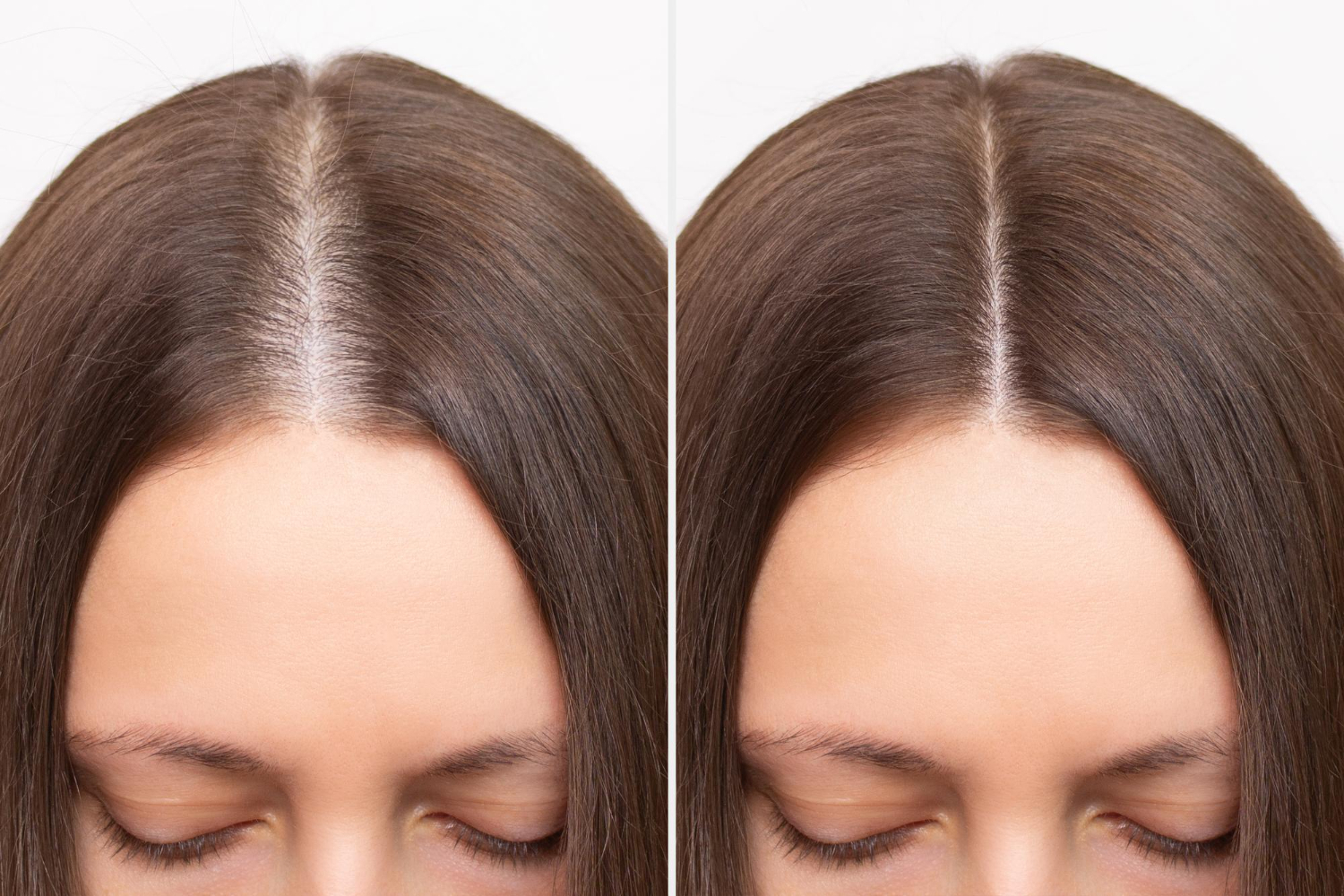
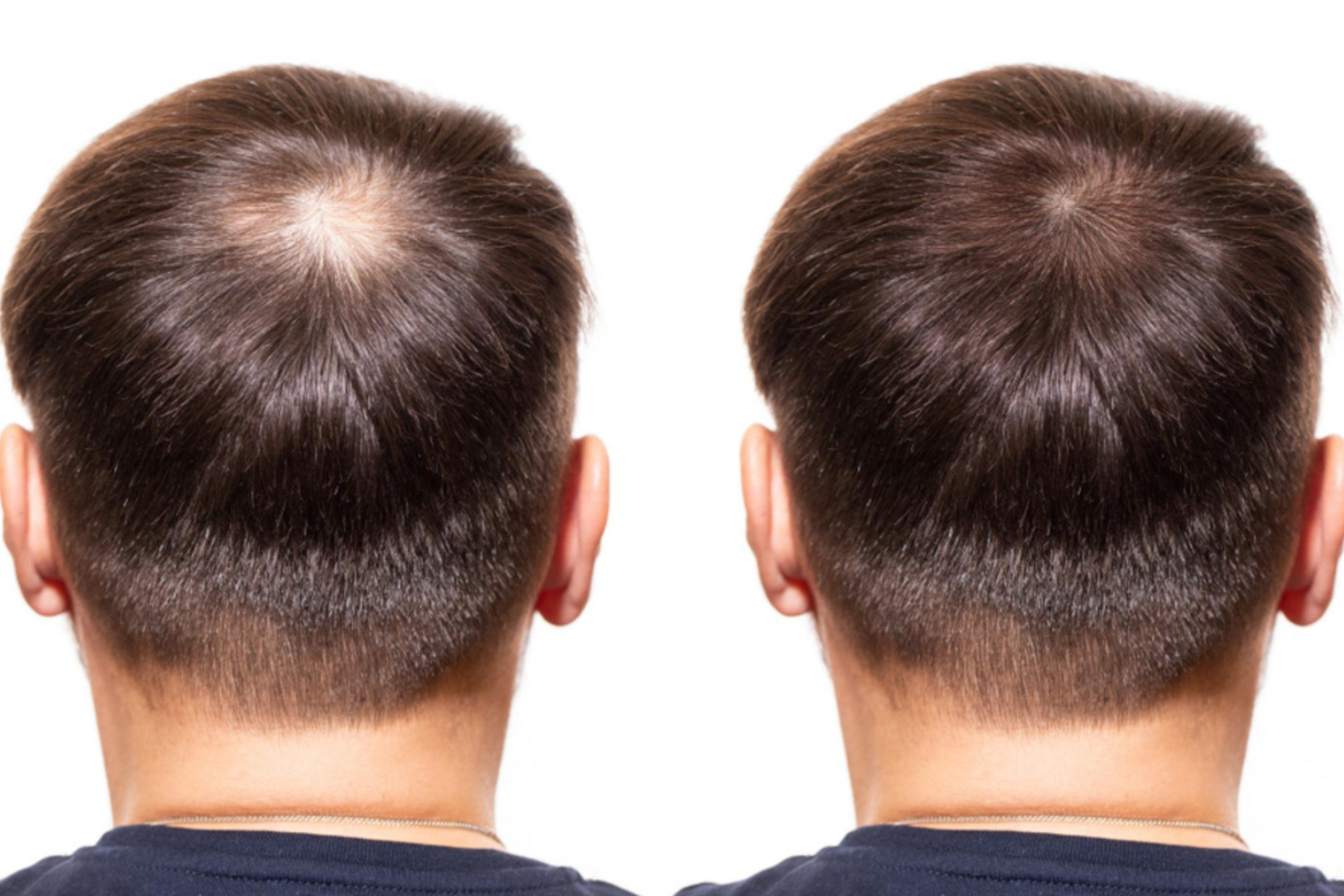
Individual results may vary.
Questions? We've Got Answers
Most patients begin noticing subtle changes, such as baby hairs and improved texture, within 6 to 8 weeks of their first treatment. Full results often become visible after completing a series of 3–4 sessions spaced one month apart.
For optimal results, a series of 3–6 treatments is typically recommended, followed by maintenance sessions every 6–12 months, depending on the progression of hair thinning and individual response.
Yes. PRF supports and strengthens existing hair follicles regardless of the underlying cause, which makes it effective for both androgenetic (pattern) hair loss in men and diffuse, hormonal thinning in women. Results depend on the stage of hair loss, patients in the early to moderate stages tend to see the strongest response.
Yes. PRF is derived from your own blood and contains no additives or hormones, making it a safe and supportive option for hormone-related hair loss in both women and men, including perimenopause, PCOS, or low testosterone.
Absolutely. Many patients enhance their results by combining PRF with microneedling, Nutrafol supplements, or hormone-focused therapies like BHRT for Women or Testosterone Pellet Treatment for men.
No. Most patients return to their daily activities immediately after the procedure. Mild redness or tenderness at the injection sites may occur but typically resolves within 24–48 hours.
Your Next Step Toward Hair Confidence
Thinning hair can feel discouraging, but with the right care, regeneration is possible, for women and men alike. At The Medical Skin Clinic, we believe in empowering every patient with non-surgical solutions that honor both beauty and biology.
If you're ready to take control of your hair health, we invite you to discover what PRF can do for you. Our expert providers are here to support you with science-backed, compassionate care in Nashua and Salem, New Hampshire.
Schedule your private consultation today and begin your journey toward fuller, healthier hair, naturally.